
Thursday, February 14, 2008


Sunday, January 27, 2008
Preparation for harvest 2008
 SOUTH AFRICAN BLOG AWARDS
Please have a look at the site http://www.sablogawards.com/ which is about to start the nominations for South Africa's best blog. PLEASE VOTE FOR US online by logging onto the site or by clicking on the logo here. Please vote for us in the Category 'Best SA Blog about Food or Wine'. Nominations and voting opens on 11th February 2008.
Harvest Planning
The first harvest planning meeting of the year went really well. For those in the Northern hemisphere, we are preparing to harvest our first Merlot vineyards on the 11th of February 2008 - it is a bit weird to be so different to the North, but there you go. The long, cold and wet winter (S Hemisphere summer) in 2007 has really set us up for a good looking harvest. Extended vine dromancy and a completely repleted water table have set up an excellent foundation which we will now build on.
The flowering window in 2007 was relatively narrow leading to an excelerated veraison and what looks like might be a very compact harvest. We will still be on the lookout for any kind of uneveness in the berries and will eploy our old tricks of 'berry variability analysis' priot to harvest to give us an indication of the extent to which we will have to rely on our grape pickers and sorters. We are now finished veraison in the Merlot and Malbec and approaching completion on the Cabs. This year we did something really interesting in one of our Malbec vineyards by taking a daily photograph of the same vine from pre- to post veraison. I am currently putting together a little video which I will post online which will show quite graphically the changes being experienced by the vine as it goes through veraison. Has anyone ever done this before? Please let me know...
Bottling the 2006 vintage
We are planning the bottling of the exemplary 2006 vintage in the first week of February this year. Zelma and Bernard are thrilled with the wines and it serves to quantifiy the growth in quality that we are experiencing as we develo our techniques, have moved into our own state-of-the-art winery and as the vineyards go past 10 years of age.
Friday, January 11, 2008
New Team Photo
 From LTR Zelma Long, Pippa Wordie, Ronald Spies, Mike Ratcliffe,
 Phil Freese, Edward Pietersen, Bernard Le Roux
Thursday, December 13, 2007
Sunday, December 02, 2007
The Vilafonte team launches the blog as a 'coffee table' book!
The Vilafonte Team were the first winery in the world to launch a winery blog. With the first posting in June 2005, the story of Vilafonte has been detailed and captured in detail to provide a fascinating insight into the workings of our small luxury wine producer. Click HERE to see a preview.
 Watch out for it on www.amazon.com - coming soon!
Wednesday, November 28, 2007

Thursday, October 25, 2007
Turning oil into wine
26 October 2007 by Mike Ratcliffe
It was with a sense of trepidation and a hint of excitement that I recently flew into Talinn, the capital city of Estonia on the shores of the Baltic ocean between Latvia and Russia.
 Trepidation only because it is a place that is certainly not considered a mainstream destination for a budding winery operator hoping to peddle his wares. The history of Estonia is chequered and violent and it is a tribute to the spirit of the people that it has risen above these tribulations to lead the pack amongst the former Soviet states that line the Baltic.
It would not be possible to say the same for neighbouring countries like Latvia and Lithuania that have had a very similar experience both having been occupied by Russian and German forces on at least two occasions in the last century. Estonia has embraced democracy and free market principles to establish a capitalistic society, as entrenched as possible, given its close proximity to the former Russian motherland.
In an unlikely twist, it is perhaps this proximity to Russia which has fostered a Western culture as America seeks trading partners to bolster its pool of allies against a Russian state intent on consolidating power and flexing its military muscle. It should also not be lost on even the most casual observer that a large proportion of Russian oil pipelines reach the ocean port in Estonia and that this country of only 1.4 million inhabitants benefits hugely from the oil export industry.
It was Gildas d’Ollone, general manager of Chateau Pichon Longueville Comtesse de Lalande, now owned by Champagne house and global distribution giant Roederer, that remarked on the potential of the former Soviet Republics. "Follow the smell of oil" is the advice which made all the sense in the world, but took some time to reveal its intelligence to me.
With oil predicted to scale $100 per barrel this year and a recent HSBC report predicting $400 per barrel within the next decade, it makes sense to acknowledge that oil, and its associated support industries are going to drive the creation of unimaginable wealth in the immediate future. Alternative energies notwithstanding, it is still oil which energizes the world and over which, ultimately, wars are fought.
 So what moral direction does a young wine marketer follow in choosing target markets for luxury wines? Is it morally reprehensible to follow such a crass strategy? Is it wrong to target the wealthy simply because they have the money? The global wine market is still in a state of oversupply which some say will never come into balance. This oversupply exists despite the US baby-boomers urgent attempt to drink as much "healthy" wine as possible in an effort to harness the life-extending properties of this magical elixir. Should we be shamelessly chasing these markets that simply did not exist a decade ago? The answer is, of course, yes.
The world is constantly changing, demographics shifting, markets and currencies cycling and tastes evolving. It is the challenge of the marketer to interpret these shifts, to adjust their thinking and to realign their market strategy in tune with the prevailing trend – or fall behind. The emergence of new previously non-existent markets occur in tandem with an ongoing consolidation and increasingly aggressive competition in the established markets which are losing their attractiveness as profit centres.
The entrenched weakness of the US Dollar provides challenges to profitability which cannot adequately be solved through price increases or supply chain margin management. A shift in geographical awareness and an "out-of-the-box" look at the new-money markets is something that becomes attractive to the astute student of wine marketing.
The wine market does not start in the UK and end in Germany. Estonia is now a member of the EU and will adopt the Euro within 24 months. Perhaps Latvia and Lithuania will too?
A 2008 election in the US will almost certainly create a new Democratic government eager to strengthen relations with Russian neighbours and might even look to expand NATO into these former Soviet Republics. This kind of scenario was unthinkable a decade ago and is now being discussed openly as Russian and America face a missile stand-off reminiscent of the cold-war. The world is changing and areas that were formerly off limits have potential to develop rapidly.
People with money gravitate towards life’s perceived pleasures like fast cars and luxury goods and we should be positioning to cater to this new demand. Perhaps it is time to purchase an Atlas to add context to the "International page" of Die Burger and allow ourselves to contemplate alternative emerging wine markets more thoroughly?
Wednesday, July 18, 2007
My China travel diary – Part 3
China is not a contiguous wine market. Currently Hong Kong consumes slightly more wine than all of mainland China combined and has long been the driver of wine growth in China.. Hong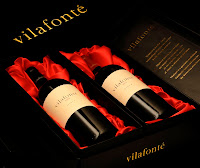 Kong is referred to as a ‘Special Administrative region’ (SAR) by Beijing and has slightly different rules to those in mainland China. But things are changing quickly and it is forecast that for the first time in 2007, mainland China will surpass Hong Kong consumption (by volume) and the theory is that things will never be the same again. Hong Kong still commands by far the largest proportion of the Chinese per capita value spend on wines as witnessed by the smaller population with a disproportionately higher per-capita income and massive ‘ex-pat’ population which kind of skews the picture. There are a lot of foreigners in Shanghai and the party scene is hot!
It would therefore seem logical to use modern westernized Hong Kong as a ‘beachhead’ for a successful Chinese market launch. This is probably not a good idea. Hong Kong and China require separate licenses and to penetrate these two markets will require separate strategies. Another up-and-coming and oft under-reported market is the gambling paradise of Macau which, by some accounts (I have not been there) already generates a larger per-capita gambling revenue than Las Vegas with all the American gaming companies represented. Again, this lucrative market demands another license – so nothing is simple. There is no reason to believe that things are going to change either as powerful distributors lobby for the right to protect their turf, a situation similar to what has been experienced in the US for decades. What is clear is that the wine market is attracting the interest of Chinese investors and as a result will start developing and growing as education and investment spur experimentation. I might add that one of the largest drivers of growth in the Chinese wine market is the informal, but substantial educational effect and cultural influence that the army of ex-pats working in China bring into this market. An ex-pat army well versed in the tradition and culture of wine is playing a significant role in ‘westernising’ the tastes and social activities of their top Chinese business counterparts providing a strong, but subtle, top-down aspirational marketing effect which should not be discounted.
The importance of holidays
Like Christmas, Birthdays and Easter in South Africa, China too has a disproportionate focus of sales congregated around a couple of major holidays which are completely dissimilar to ours. Chinese Lunar New Year which falls in January/February and the Chinese ‘Mooncake Festival’ on the 15th day of the 8th month in the Chinese lunar calendar are by far the most significant holidays. At this time, the moon is at its fullest and brightest, marking an ideal time to celebrate the abundance of the summer's harvest – and drink lots of wine. Another difference is that a huge proportion of the purchases around these dates are slanted towards the Chinese tradition of ‘gift-giving’ which is pervasive and something that potential Asian wine marketers should bear in mind. Is their a fundamental difference in selling or marketing technique as a result of the variation in intention of the purchaser? Of course there is and it felt to me, at many times, that the wine industry is not capitalizing on this opportunity. This brings me neatly to a topic that caught my eye repeatedly. Packaging …
Every wine that comes into China requires a Chinese approved back label. This, unlike the norm in South African exporting, is not simply a small sticker at the base of a back label informing the potential imbiber of the importers details, but rather a completely unique back label with a full translation, in Mandarin, of every detail of the back label. The vast majority of wines on the shelves and in the restaurants that I visited had poor quality, cheap, wrinkled back labels which were clearly an ‘afterthought’ and were simply (and awkwardly) pasted over the existing back label to acquiesce to the onerous legislative requests of the overzealous wine authorities. It was clear to me that the whiskey and champagne producers had (again) stolen a march on the wine industry by sorting this issue out and generally had sophisticated and beautiful packaging specifically designed for the Chinese legal requirements. It should furthermore be taken into consideration that all existing marketing material, printing resources, websites and presentations have limited use in this country for the development of brands unless it is translated and, more importantly, contextualized to Chinese custom. Very few wineries had made the effort to design a Chinese back label and adapt their marketing materials. This is another small opportunity that potential SA exporters might seize to steal a small advantage on the competitors.
Overall, the Chinese market is in it’s infancy with much investment education and development ahead, but there is no reason why things could not change rapidly. There is potential here and it is really going to be interesting to watch the development of this and other Asian countries.
 Kong is referred to as a ‘Special Administrative region’ (SAR) by Beijing and has slightly different rules to those in mainland China. But things are changing quickly and it is forecast that for the first time in 2007, mainland China will surpass Hong Kong consumption (by volume) and the theory is that things will never be the same again. Hong Kong still commands by far the largest proportion of the Chinese per capita value spend on wines as witnessed by the smaller population with a disproportionately higher per-capita income and massive ‘ex-pat’ population which kind of skews the picture. There are a lot of foreigners in Shanghai and the party scene is hot!
It would therefore seem logical to use modern westernized Hong Kong as a ‘beachhead’ for a successful Chinese market launch. This is probably not a good idea. Hong Kong and China require separate licenses and to penetrate these two markets will require separate strategies. Another up-and-coming and oft under-reported market is the gambling paradise of Macau which, by some accounts (I have not been there) already generates a larger per-capita gambling revenue than Las Vegas with all the American gaming companies represented. Again, this lucrative market demands another license – so nothing is simple. There is no reason to believe that things are going to change either as powerful distributors lobby for the right to protect their turf, a situation similar to what has been experienced in the US for decades. What is clear is that the wine market is attracting the interest of Chinese investors and as a result will start developing and growing as education and investment spur experimentation. I might add that one of the largest drivers of growth in the Chinese wine market is the informal, but substantial educational effect and cultural influence that the army of ex-pats working in China bring into this market. An ex-pat army well versed in the tradition and culture of wine is playing a significant role in ‘westernising’ the tastes and social activities of their top Chinese business counterparts providing a strong, but subtle, top-down aspirational marketing effect which should not be discounted.
The importance of holidays

Like Christmas, Birthdays and Easter in South Africa, China too has a disproportionate focus of sales congregated around a couple of major holidays which are completely dissimilar to ours. Chinese Lunar New Year which falls in January/February and the Chinese ‘Mooncake Festival’ on the 15th day of the 8th month in the Chinese lunar calendar are by far the most significant holidays. At this time, the moon is at its fullest and brightest, marking an ideal time to celebrate the abundance of the summer's harvest – and drink lots of wine. Another difference is that a huge proportion of the purchases around these dates are slanted towards the Chinese tradition of ‘gift-giving’ which is pervasive and something that potential Asian wine marketers should bear in mind. Is their a fundamental difference in selling or marketing technique as a result of the variation in intention of the purchaser? Of course there is and it felt to me, at many times, that the wine industry is not capitalizing on this opportunity. This brings me neatly to a topic that caught my eye repeatedly. Packaging …
Every wine that comes into China requires a Chinese approved back label. This, unlike the norm in South African exporting, is not simply a small sticker at the base of a back label informing the potential imbiber of the importers details, but rather a completely unique back label with a full translation, in Mandarin, of every detail of the back label. The vast majority of wines on the shelves and in the restaurants that I visited had poor quality, cheap, wrinkled back labels which were clearly an ‘afterthought’ and were simply (and awkwardly) pasted over the existing back label to acquiesce to the onerous legislative requests of the overzealous wine authorities. It was clear to me that the whiskey and champagne producers had (again) stolen a march on the wine industry by sorting this issue out and generally had sophisticated and beautiful packaging specifically designed for the Chinese legal requirements. It should furthermore be taken into consideration that all existing marketing material, printing resources, websites and presentations have limited use in this country for the development of brands unless it is translated and, more importantly, contextualized to Chinese custom. Very few wineries had made the effort to design a Chinese back label and adapt their marketing materials. This is another small opportunity that potential SA exporters might seize to steal a small advantage on the competitors.
Overall, the Chinese market is in it’s infancy with much investment education and development ahead, but there is no reason why things could not change rapidly. There is potential here and it is really going to be interesting to watch the development of this and other Asian countries.
Sunday, July 15, 2007
Saturday, July 14, 2007
Subscribe to:
Posts (Atom)